 Kellie Roberts
One tablespoon of water weighs about 15g, which is enough to change pastry from tender and flaky to firm and tough. That small margin explains why a cheese and onion pasty succeeds or fails before it reaches the oven. The filling needs deep onion flavour without free moisture, while the pastry needs cold butter, light handling, and a proper chill.
Why cheese and onion pasties need a dry filling
Onions bring flavour and hidden water
Onions contain a large amount of water. When they cook, that water escapes as steam and leaves behind sweeter, softer layers. If you place freshly cooked onions straight onto pastry, the steam softens the dough from the inside. The base may brown while the centre stays damp.
For four pasties, use about 300g sliced onions and cook them over medium-low heat for 18 to 25 minutes. Stir every few minutes. The onions should look soft and lightly golden, not wet or swimming in butter. Spread them on a plate for at least 10 minutes before mixing them with cheese.
Cheese adds fat, salt, and structure
Cheese melts into the onions and gives the filling its savoury body, but too much creates a greasy pocket. A firm mature cheddar works better than a very soft cheese because it keeps more shape during baking. Use 150g grated cheese for four pasties. The filling should clump when pressed but should not release liquid.
The clear verdict is simple: cook the onions first, cool them fully, then add the cheese. That order protects the pastry and gives the filling a cleaner flavour.
What ratio makes shortcrust flaky instead of hard
The reliable four-pasty formula
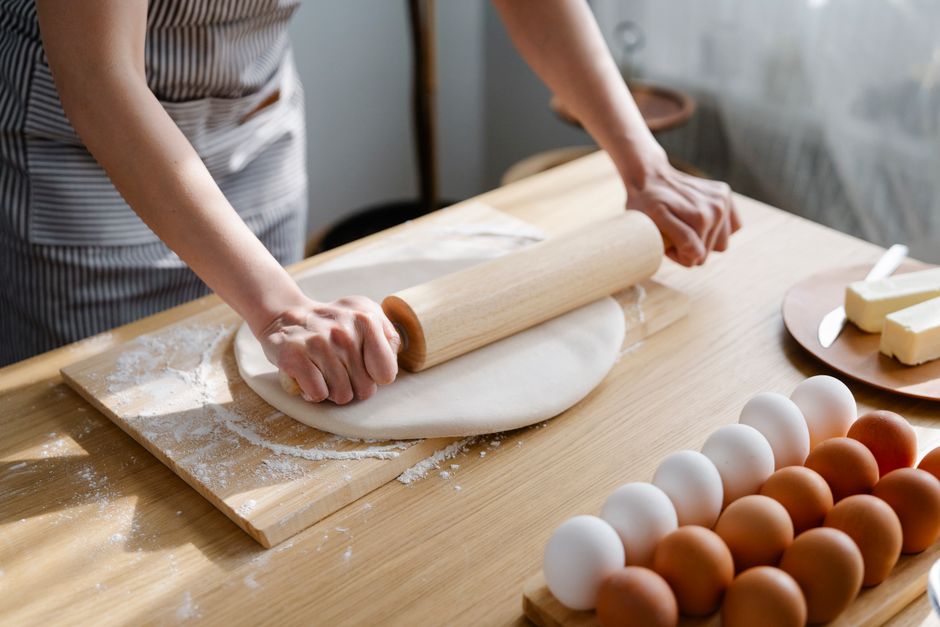
Use a two-to-one flour-to-butter ratio by weight. For four medium pasties, the working formula is 250g plain flour, 125g cold unsalted butter, ½ teaspoon fine salt, and 55 to 65ml ice-cold water. The water range matters because flour absorbs moisture differently on dry and humid days.
| Ingredient | Amount | Purpose |
|---|---|---|
| Plain flour | 250g | Forms the pastry structure |
| Cold unsalted butter | 125g | Creates tender layers and flavour |
| Fine salt | ½ teaspoon | Balances the cheese and onions |
| Ice-cold water | 55–65ml | Brings the dough together |
| Egg wash | 1 beaten egg | Helps the crust brown |
How to build visible flakes
Rub about 90g of the butter into the flour until the mixture resembles coarse crumbs. Cut the remaining 35g into small flat pieces and leave them visible. Add the water one tablespoon at a time, pressing the dough together with a knife or fingertips. Stop as soon as no dry flour remains.
Flatten the dough into a disc, wrap it, and chill it for 30 minutes. Do not knead it smooth. Small butter pieces melt in the oven and leave the flaky gaps that make this pasty worth the effort.
How to cook the onion filling without soggy pastry
Use this five-step cooking order
- Slice 300g of onions thinly and evenly. Thick pieces cook at different speeds and leave hard centres.
- Warm 15g butter and 1 teaspoon neutral oil in a wide frying pan over medium-low heat.
- Add the onions and a small pinch of salt. Cook for 18 to 25 minutes, stirring until soft, pale gold, and almost dry.
- Transfer the onions to a cool plate. Leave them uncovered for 10 minutes so steam can escape.
- Mix with 150g grated mature cheddar, 1 teaspoon English mustard, and ¼ teaspoon black pepper only after the onions have cooled.
The texture test that prevents leaks
Pick up a spoonful of filling and squeeze it gently. It should hold together without dripping. If liquid appears, return the filling to the pan for two or three minutes, then cool it again. This is a more useful test than judging colour alone because pale onions can still contain enough moisture to damage the crust.
Do not add cream, milk, or a large amount of soft cheese. Those ingredients loosen the mixture and make sealing harder. The best filling is compact, cool, and slightly drier than you think it needs to be before baking.
Which cheese gives the pasty the strongest flavour?
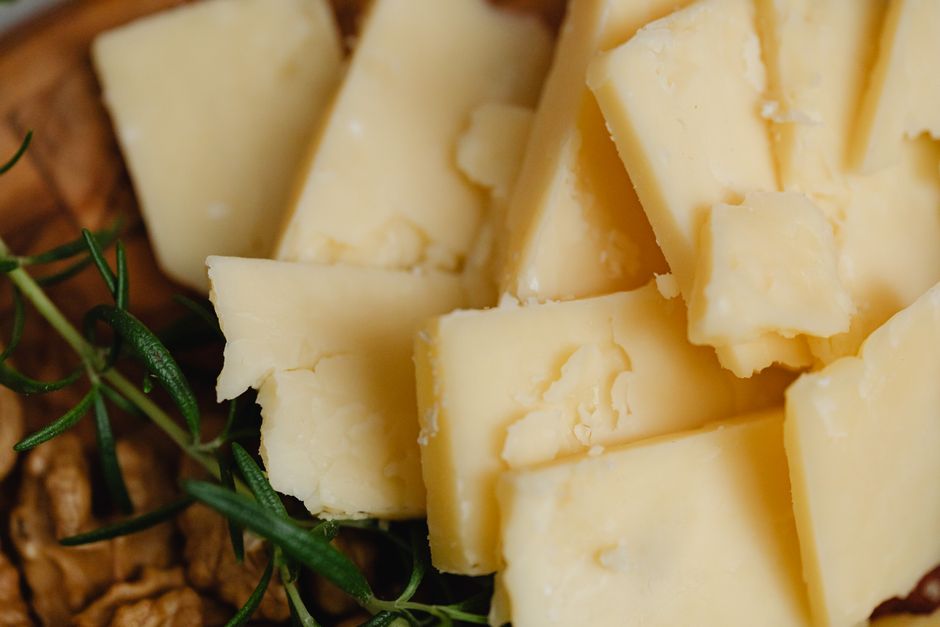
Is mature cheddar the right choice?
Yes. For this recipe, mature cheddar is the clear winner because it brings enough salt and sharpness to stand up to sweet onions. Cathedral City Mature Cheddar in a 400g block is a practical example; grate 150g for the filling and keep the rest for another meal. A block also melts more evenly than pre-shredded cheese coated with anti-caking powder.
Which butter and mustard are practical?
Kerrygold Unsalted Butter in a 250g pack works well for the 125g pastry amount because its firm texture is easy to grate or cube while cold. Colman’s English Mustard in a 100g jar supplies enough heat with one teaspoon. Maldon Sea Salt in a 250g box is useful for seasoning the onions, but crush the flakes between your fingers so the salt spreads evenly.
For a shortcut, one 320g Jus-Rol Shortcrust Pastry Sheet can replace homemade pastry, but it will be thinner and less layered. Choose the homemade version when flaky texture is the main goal.
How to shape and seal the pasties so they do not split
Make the pasties slightly smaller rather than overfilling them. Divide the chilled dough into four pieces and roll each one into a circle about 18cm wide and 3mm thick, keeping the centre no thinner than the edge; place roughly 115g of cold filling on one side, leave a 2cm border, and fold the empty half over without stretching the dough.
Press the edge closed with your fingertips first, then crimp from one end to the other, because a decorative crimp only works after the first seal holds; if the dough resists, let it rest for five minutes instead of pulling it into shape, since stretched pastry shrinks in the oven and pushes the filling through the seam.
Cut one small steam vent in the top of each pasty, brush with beaten egg, and place them on a lined tray with space between them; the vent lets pressure escape, while the egg wash gives the crust colour, but neither step can rescue a wet filling or an overfilled shell.
Chill the shaped pasties for 20 minutes before baking at 200°C fan or 220°C conventional for 25 to 30 minutes, until the base feels firm and the top is an even deep gold; the short chill is the best insurance against butter leaking before the crust sets.
What usually goes wrong with cheese and onion pasties?
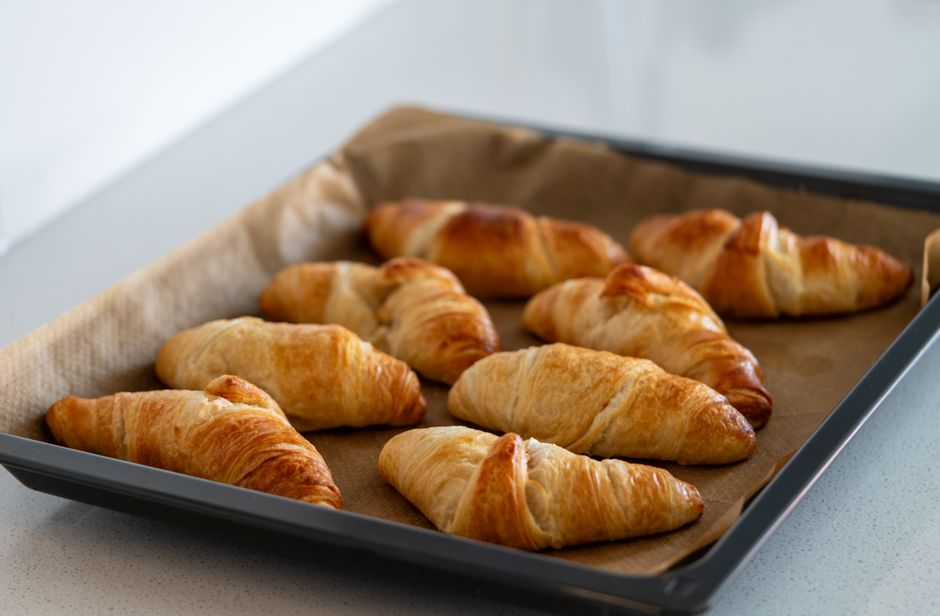
The mistakes that cost you crisp pastry
The most common mistake is treating the filling as ready when the onions are merely soft. Soft is not the same as dry. Keep cooking until the pan looks almost clear of liquid, then cool the onions on a plate. A second common error is adding all the water at once. That forces you to compensate with flour, which creates a heavy crust.
- Soggy base: the onions were hot or wet when added. Cool them fully and use a metal baking tray.
- Hard pastry: the dough was kneaded or overworked. Mix only until it holds together.
- Split seams: the border was too narrow or the filling was piled too high. Leave 2cm around the edge.
- Greasy crust: the butter was warm before baking. Chill the shaped pasties for 20 minutes.
- Pale tops: the oven was underheated or the egg wash was too thin. Preheat for at least 20 minutes.
When should you choose a different pastry?
Do not choose flaky shortcrust when you need a fast, ultra-light snack with almost no preparation. Ready-made puff pastry gives taller layers and cooks quickly, but it can hide the onion flavour and leak more readily around a wet filling. Shortcrust is the better choice for a sturdy lunch pasty that can be held in one hand without collapsing.
Do not use this method for a very soft cheese such as fresh mozzarella unless you drain it thoroughly. Its moisture turns the centre loose and makes the seam unreliable. Firm cheddar remains the safer option.
How long should pasties bake, cool, and reheat?
Use colour and texture together
Bake four chilled pasties for 25 to 30 minutes at 200°C fan or 220°C conventional. Start checking at 25 minutes. The crust should be deep gold, the underside should feel dry when lifted carefully, and the seam should stay closed. If the tops brown early, lower the tray one shelf rather than covering the pasties immediately, because trapped steam can soften the crust.
Cooling and storage rules
Rest the pasties for 10 to 15 minutes before eating. This gives the melted cheese time to settle and stops the first cut from releasing hot fat. For later eating, cool them completely on a rack, refrigerate in a sealed container, and use within three days. Reheat at 180°C fan for 12 to 15 minutes on a tray. A microwave warms the centre but leaves the pastry soft, so it is only a last resort.
For freezing, freeze the shaped unbaked pasties on a tray, then transfer them to a sealed container. Bake from frozen at 190°C fan for about 35 to 40 minutes, checking that the centre is fully hot. The crispest result still comes from baking the pasties fresh after the short chill.