
 Kellie Roberts
 Forced rhubarb is not simply a pink version of outdoor rhubarb. It is usually sweeter, more tender, and quicker to cook, but it can still produce a thin, watery filling if handled carelessly. This recipe sets out the weights, heat, and timing that give the best balance of sharp fruit and crisp topping.
What makes forced rhubarb better for crumble?
Forced rhubarb is the best choice for a delicate crumble filling because its stalks are tender and its flavour is clean. The stalks grow in darkness, which limits leaf production and creates a softer texture than many late-season outdoor varieties. Their colour can range from pale pink to bright red, but colour alone does not prove sweetness. Taste and texture matter more.
Why the stalks taste different
Forced rhubarb normally needs less cooking time than thick outdoor stalks. Cut it into pieces about 2cm long so each piece softens at roughly the same rate. Large chunks stay firm in the centre while small pieces collapse into juice. Trim away the leaves completely because rhubarb leaves are not suitable for eating. Wash the stalks, dry them well, and weigh them after trimming.
How ginger controls the sharpness
Rhubarb has a strong sour edge, so ginger adds warmth rather than simply adding sweetness. Use 1 to 2 teaspoons of ground ginger for 600g of prepared rhubarb, or add 20g of finely chopped stem ginger for a more direct flavour. Sugar should support the fruit, not hide it. Start with 120g of caster sugar, then adjust only after considering the sweetness of the custard, cream, or ice cream served alongside the crumble.
The most reliable verdict is simple: choose forced rhubarb when you want a bright, tender filling with a short bake. Choose outdoor rhubarb when you prefer a firmer, more rustic texture.
How should you prepare rhubarb to prevent a watery filling?
Do not cook the rhubarb on the hob before baking. That extra step releases juice before the crumble topping has time to brown. Tossing raw prepared stalks with sugar and a small amount of thickener gives the oven both jobs at once: softening the fruit and reducing excess liquid.
Use this preparation sequence
- Trim the leaves and dry ends from 600g of forced rhubarb.
- Cut the stalks into even 2cm pieces and place them in a 1.5-litre baking dish.
- Add 120g of caster sugar, 1 tablespoon of plain flour, 1 teaspoon of ground ginger, and 1 tablespoon of orange juice.
- Mix gently until every piece has a light coating. Leave the mixture for no more than 10 minutes.
- Spread the fruit into one even layer. Do not compress it with a spoon.
- Add the crumble topping immediately so the fruit does not sit in released juice.
Why flour matters more than extra sugar
Flour binds part of the liquid that the rhubarb releases as it heats. Cornflour also works, but use only 2 teaspoons because too much can create a glossy, spoonable gel. Extra sugar will not solve a watery filling; it draws out more moisture through osmosis. The practical test is the raw mixture: it should look lightly coated, not submerged in syrup.
If the rhubarb is especially wet after washing, pat it dry again. If the stalks are thick, extend the bake by five minutes rather than cutting them smaller, because unevenly tiny pieces turn to puree before the topping finishes.
Which crumble ingredients give the best texture?
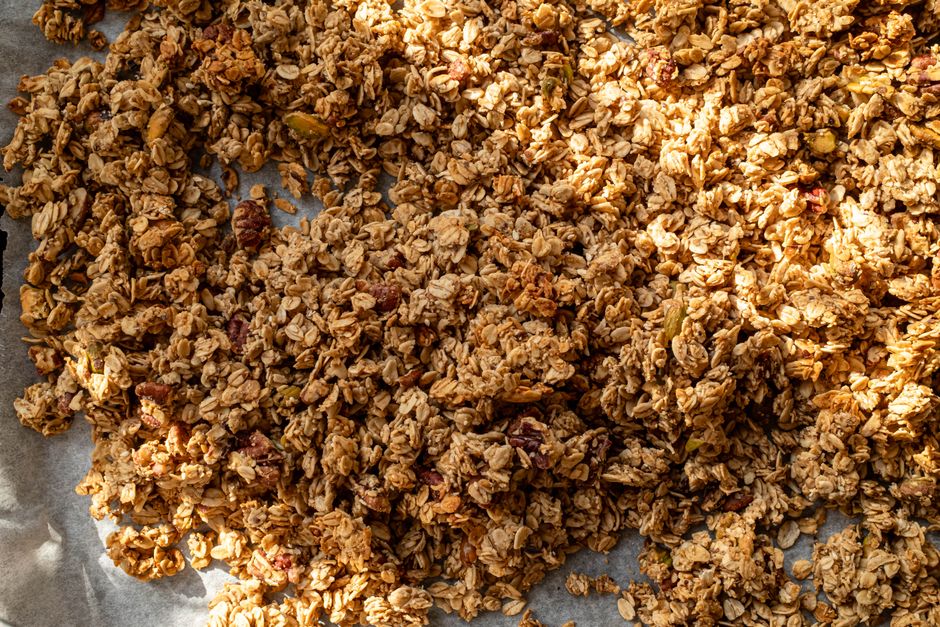
For the best topping, use a 2:1:1 ratio of flour, butter, and oats by weight. A reliable batch for 600g of rhubarb contains 140g plain flour, 70g cold unsalted butter, 70g rolled oats, 80g light brown sugar, and a pinch of salt. This produces a topping that stays crisp at the edges while absorbing some fruit juice in the centre.
Ingredient choices that change the result
| Ingredient | Amount | Effect |
|---|---|---|
| Plain flour | 140g | Creates structure and reduces loose juice |
| Cold unsalted butter | 70g | Forms crumbly pockets and browning |
| Rolled oats | 70g | Adds chew and a toasted surface |
| Light brown sugar | 80g | Gives caramel flavour and colour |
| Ground ginger | 1 teaspoon | Links the topping to the fruit |
Real supermarket examples and package sizes
Brand choice matters less than the label, but these familiar products fit the method: Tate & Lyle Golden Caster Sugar in a 1kg bag, Kerrygold Unsalted Butter in a 250g block, Quaker Jumbo Oats in a 1kg bag, and Schwartz Ground Ginger in a 36g jar. None is required, and none changes the cooking temperature. The clear winner is the ingredient that matches the specification: cold block butter, plain flour, rolled oats, and a ginger powder with a fresh aroma.
Rub the butter into the flour with your fingertips until the mixture has uneven pieces ranging from sand to small peas. Stir in the oats and sugar afterward. Mixing everything at once often overworks the flour and produces a dense slab rather than a loose crumble.
What is the exact baking method for a crisp topping?
The strongest method uses one oven temperature and a shallow dish. A deep dish traps steam, while a crowded dish leaves the topping pale in the centre. Heat the oven to 180°C conventional or 160°C fan before assembling the crumble. Put the dish on a baking tray to catch any bubbling syrup.
Follow these cooking stages
- Scatter the topping loosely over the prepared rhubarb, leaving a few small gaps for steam to escape.
- Bake for 35 to 40 minutes, until the fruit bubbles at the edges.
- Check the centre of the topping. It should look dry and golden, not pale or greasy.
- If the edges brown early, cover only the rim with foil and continue baking.
- Rest the crumble for 15 minutes before serving so the juices thicken.
How to judge doneness without guessing
Insert a thin knife through the topping near the centre. It should meet soft fruit with slight resistance, not hard stalks. A runny spoonful straight from the oven does not always signal failure; the syrup becomes thicker as it cools. If the fruit is tender but the topping is pale, move the dish to a higher oven shelf for 5 minutes. If the topping is brown while the stalks remain firm, lower the dish and cover the surface loosely. The final texture should hold its shape briefly on a spoon before settling.
Serve warm with cold vanilla ice cream, pouring cream, or thick custard. The temperature contrast makes the sour fruit taste rounder without requiring more sugar.
Why does rhubarb crumble fail, and when should you choose another dessert?
Most failed crumbles come from one of four errors: too much liquid, a topping that was packed down, a dish that is too deep, or a bake stopped before the fruit bubbles. Each mistake has a visible result.
Common failures and their fixes
- Watery base: dry the rhubarb, add 1 tablespoon of flour, and avoid pre-cooking the fruit.
- Hard rhubarb: cut thick stalks smaller or add 5 to 10 minutes to the bake.
- Soggy topping: use cold butter, keep the topping loose, and rest the finished dish uncovered.
- Burnt surface: bake on the middle shelf and cover the topping loosely once it turns golden.
- Flat flavour: add salt and ginger before adding more sugar.
When another dessert is the better choice
Do not choose crumble if you need neat slices, a portable dessert, or a make-ahead dish that must stay crisp for hours. A forced rhubarb and ginger tart gives cleaner portions, while a compote is better when you want a quick topping for yoghurt or porridge. A baked rice pudding suits diners who dislike sharp fruit. The crumble remains the best option for a warm family dessert because it tolerates imperfect cuts and rewards serving straight from the dish.
For a very tart harvest, pair the fruit with apple, pear, or strawberries, but reduce the added sugar only after checking the other fruit. Pear gives the softest sweetness; apple keeps more shape. The wrong alternative is adding a large amount of sugar to rescue under-ripe rhubarb, because the filling can become both sweet and watery.
How should you serve and store forced rhubarb crumble?
Serve the crumble after a 15-minute rest, while the topping is still warm and the filling has started to set. That timing gives the most convincing contrast between crisp crumbs and soft fruit. A fully cooled crumble tastes good but loses some of its surface crunch.
Can you make it ahead?
Assemble the fruit and topping separately up to 12 hours ahead. Refrigerate both, then bring the topping out for 15 minutes while the oven heats. Do not leave raw sugared rhubarb at room temperature because it will release liquid into the dish. Bake from chilled for 40 to 45 minutes, checking that the centre bubbles before serving.
Which serving and storage option wins?
| Situation | Best method | Verdict |
|---|---|---|
| Immediate dessert | Rest 15 minutes, then serve warm | Best topping texture |
| Next-day dessert | Refrigerate covered and reheat at 160°C for 20 minutes | Best convenience |
| Freezing | Freeze unbaked for up to 2 months and bake from frozen | Best planning option |
| Extra-crisp topping | Reheat uncovered on a baking tray | Best texture recovery |
The final comparison is clear: forced rhubarb gives the most delicate filling, ginger prevents the flavour from becoming one-dimensional, and a loose oat topping protects the dish from feeling heavy. For a dependable cold-weather dessert, this combination is the strongest choice.