
 Kellie Roberts
 You bought beautiful winter produce, sliced everything, and ended up with a bowl of bitter leaves floating in orange juice. The fix is not more sugar or a heavier dressing. This salad works when you control the cut, keep the chicory dry, and add the vinaigrette at the last possible minute. Use the method below for a sharp, juicy salad that can sit on the table without collapsing.
Why blood orange, fennel and chicory work together
Sweetness needs bitterness
Blood oranges bring bright acidity and a raspberry-like sweetness, but their juice can make leafy salads taste flat if you add too much. Fennel supplies a cool, anise-like crunch. Chicory, including radicchio, Belgian endive, and frisée, adds bitterness that keeps the dish from reading like fruit salad. The balance is deliberate: sweet citrus, crisp vegetable, bitter leaf, salty cheese, and a small amount of fat.
The correct texture is crisp, not soft
The best version has three distinct bites. The orange should release juice when you chew it, the fennel should remain firm, and the chicory should crack slightly at the edges. Slice the fennel paper-thin but leave the orange pieces larger than the leaves. That stops the fruit from disappearing into the bowl. For a clear verdict, this combination beats a basic green salad in winter because it uses produce that stays flavorful in cold weather and does not need tomatoes, cucumbers, or tender herbs.
Choose the right cut for every ingredient
Ingredient and cut guide
| Ingredient | Amount for 4 | Best preparation | Reason |
|---|---|---|---|
| Blood oranges | 3 medium | Trimmed and cut into rounds or half-moons | Large pieces hold their shape |
| Fennel bulb | 1 large | Halved, cored, sliced 2 mm thick | Thin slices soften slightly without losing crunch |
| Chicory | 250 g | Leaves torn or sliced into 3 cm pieces | Small pieces catch the dressing |
| Toasted walnuts | 60 g | Broken into rough pieces | Irregular pieces add varied texture |
| Goat cheese | 80 g | Crumbled at the end | Salty creaminess rounds out bitterness |
How much dressing to use
Start with 5 tablespoons of dressing for 4 servings, then add more only after tossing. A salad this juicy needs less liquid than a dry lettuce salad. If the bowl looks wet at the bottom, you have crossed the line. Drain excess orange juice from the cutting board before adding the fruit.
Build the salad without making it watery
Step 1: Prep the chicory first
Separate the leaves, rinse them in cold water, and spin them until dry. If you do not own a spinner, spread the leaves over a clean tea towel, cover them with another towel, and leave them for 10 minutes. Water on the leaves dilutes the vinaigrette and makes bitterness stand out. Remove any thick white cores from Belgian endive, but keep the smaller inner leaves whole.
Step 2: Prepare the citrus
Cut a thin slice from the top and bottom of each blood orange. Stand the fruit upright and cut away the peel and white pith in strips. Slice the flesh into 5 mm rounds, then cut large rounds into half-moons. Catch the juice in a bowl, but measure it before adding it to the dressing. Two tablespoons is enough for the vinaigrette. Extra juice belongs in a glass or a separate sauce, not in the salad bowl.
Step 3: Slice the fennel and toast the nuts
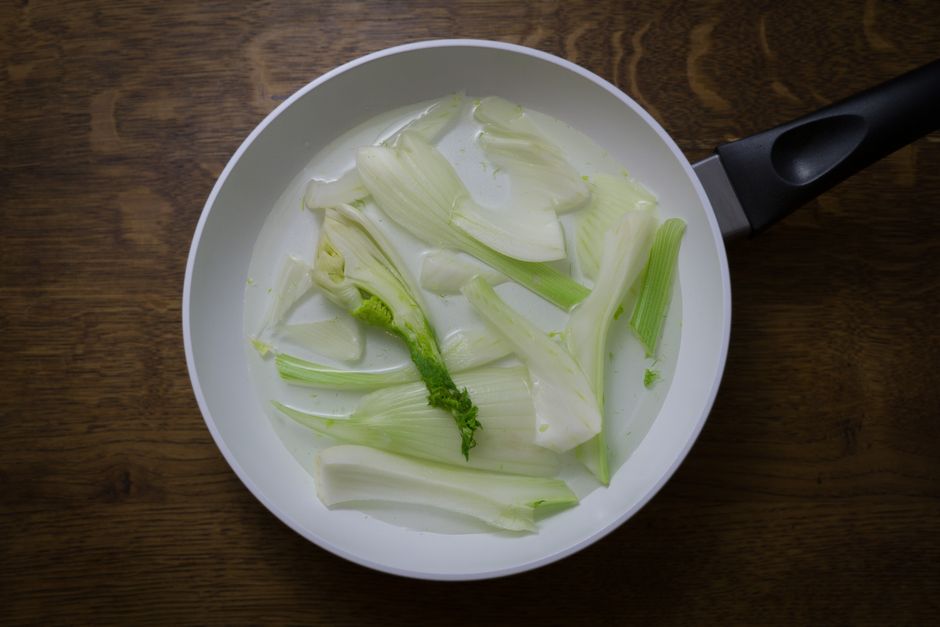
Remove the fennel stalks and reserve the fronds. Halve the bulb through the root, cut out the hard core, and slice across the bulb with a sharp knife or mandoline. Toast walnuts in a dry 10-inch skillet over medium heat for 4 to 6 minutes, shaking the pan twice. Stop when they smell warm and nutty; dark edges turn bitter quickly.
For the smallest useful kitchen kit, an OXO Good Grips 8-Inch Chef’s Knife handles the orange and fennel, a Microplane Premium Classic Zester adds fine zest, and a Lodge 10.25-Inch Cast Iron Skillet gives the walnuts an even toast. None is required, but the knife is the one tool worth prioritizing.
Make the citrus vinaigrette in the right order
Use this ratio
- Put 2 tablespoons blood orange juice, 1 tablespoon sherry vinegar, 1 teaspoon Dijon mustard, and 1 teaspoon honey in a small bowl.
- Add 1 small grated garlic clove, ¼ teaspoon fine salt, and 6 twists of black pepper.
- Whisk in 5 tablespoons extra-virgin olive oil in a slow stream.
- Taste with a chicory leaf, not a spoon. Add salt if the dressing tastes sharp, or another ½ teaspoon honey if the leaves taste aggressively bitter.
Why the mustard matters
Mustard helps the oil and acidic ingredients stay mixed long enough to coat the leaves evenly. Honey softens the edge without turning the dressing sweet. Do not replace the sherry vinegar with only orange juice. Orange juice lacks enough acidity to lift the fennel and cut through goat cheese. If you need a sharper dressing, use lemon juice for half of the orange juice rather than adding more vinegar.
My serving method: dress the leaves, not the fruit
Dress the chicory and fennel first, then add the blood orange. This is the decision that keeps the salad crisp. Toss the dry leaves and fennel with three tablespoons of vinaigrette in a wide bowl for 20 seconds. Add the orange pieces and toss once with your hands. Finish with walnuts, goat cheese, fennel fronds, and a final spoonful of dressing around the sides of the bowl. The fruit stays intact, the cheese does not smear, and every bite gets enough acid.
Serve it with the right main dish
This salad is strongest beside rich food. Serve it with roast chicken, pork shoulder, baked salmon, or a white-bean gratin. The bitterness cuts through butter and browned meat. It also works as a light lunch with a slice of sourdough, but it needs the walnuts and cheese for enough staying power.
Keep the garnish restrained
Use one creamy element and one crunchy element. Goat cheese plus walnuts is the cleanest pairing. Blue cheese plus pecans makes the dish heavier and can overpower the orange. Avocado sounds appealing but turns the salad soft and dull. The best garnish is not the most elaborate one; it is the one that preserves the contrast between crisp, juicy, bitter, and creamy.
Common questions about this winter salad
Can you make it ahead?
Yes, but store the components separately for up to 24 hours. Wash and dry the chicory, slice the fennel, segment the oranges, toast the walnuts, and mix the vinaigrette in advance. Keep the orange in a sealed container with its juice drained off. Toss everything 10 minutes before serving. Dressed leftovers remain edible, but the chicory loses its snap after about 45 minutes.
What can replace blood oranges?
Use Cara Cara oranges for a sweeter salad or grapefruit for a sharper one. If using grapefruit, remove as much membrane as possible because it adds extra bitterness. Navel oranges work in a pinch, but they lack the deep color and berry note that make blood oranges special. For a firm verdict, Cara Cara is the closest easy substitute; grapefruit needs more honey in the dressing.
How do you reduce chicory bitterness?
Choose pale inner leaves, remove thick cores, and balance the salad with enough salt and fat. Soaking chicory in ice water for 10 minutes can make it crisper and slightly milder, but it will not remove all bitterness. Do not blanch it for this recipe. Heat makes the leaves limp, which removes the quality that gives the salad its bite.
Fix these mistakes before serving
The salad tastes harsh
- Add salt first. Under-salted chicory tastes more bitter than it really is.
- Add 1 teaspoon olive oil if the dressing feels thin and aggressive.
- Add a few more orange pieces, not a large pour of juice.
- Scatter the goat cheese across the bowl so each serving gets some fat and salt.
The salad is soggy
Drain the oranges, dry the chicory again, and toss only the portion you will eat immediately. Never leave the salad sitting in its dressing while the oven finishes. If you need to transport it, pack the dressing in a small jar and the walnuts in a separate container. The salad is ready when the leaves are coated but the bottom of the bowl is dry.
Do not buy special ingredients for this dish if your shop has no blood oranges. Cara Cara oranges, a firm fennel bulb, and radicchio make a better salad than tired blood oranges and watery greens. The method matters more than the label.