
 Kellie Roberts
 Why does ratatouille sometimes come out as a watery vegetable stew instead of a tray of browned, sweet vegetables? The answer is usually crowded space, excess moisture, or adding every ingredient at the same time. This ratatouille traybake fixes those problems with a hot oven, a large pan, and staggered cooking times.
The recipe makes 4 generous servings. You need 1 medium eggplant, 2 medium zucchini, 2 bell peppers, 1 red onion, 12 ounces of cherry tomatoes, 4 garlic cloves, 3 tablespoons olive oil, 1 teaspoon dried thyme, 1 teaspoon kosher salt, black pepper, and 1 tablespoon red wine vinegar. Serve it with crusty bread, couscous, rice, pasta, or a fried egg.
Why does ratatouille traybake turn watery?
Vegetables release water at different speeds
Eggplant, zucchini, peppers, onions, and tomatoes do not cook at the same rate. Zucchini and tomatoes contain a lot of water, while eggplant needs time to soften and absorb oil. If you place everything on the tray at once, the wet vegetables release steam before the firm vegetables brown. That steam lowers the surface temperature and leaves you with soft, pale pieces.
Ratatouille works because roasting concentrates flavor. The vegetables need direct contact with a hot surface, space for air to move, and enough oil to carry heat across their cut surfaces. Think of the tray as a broad cooking surface, not a deep casserole dish.
Cut size controls the finished texture
Cut the eggplant and zucchini into 1-inch chunks. Cut the peppers into pieces about 1 1/2 inches wide, slice the onion into thick wedges, and leave the cherry tomatoes whole. Smaller pieces cook faster but collapse quickly. Larger pieces stay firm but may remain raw in the center.
Dry the vegetables after washing them. Do not salt the zucchini or eggplant an hour ahead unless you plan to rinse and dry them thoroughly. That old step can help with some bitter eggplant, but for this traybake it often adds extra surface moisture and slows browning.
What is the correct ratatouille traybake schedule?
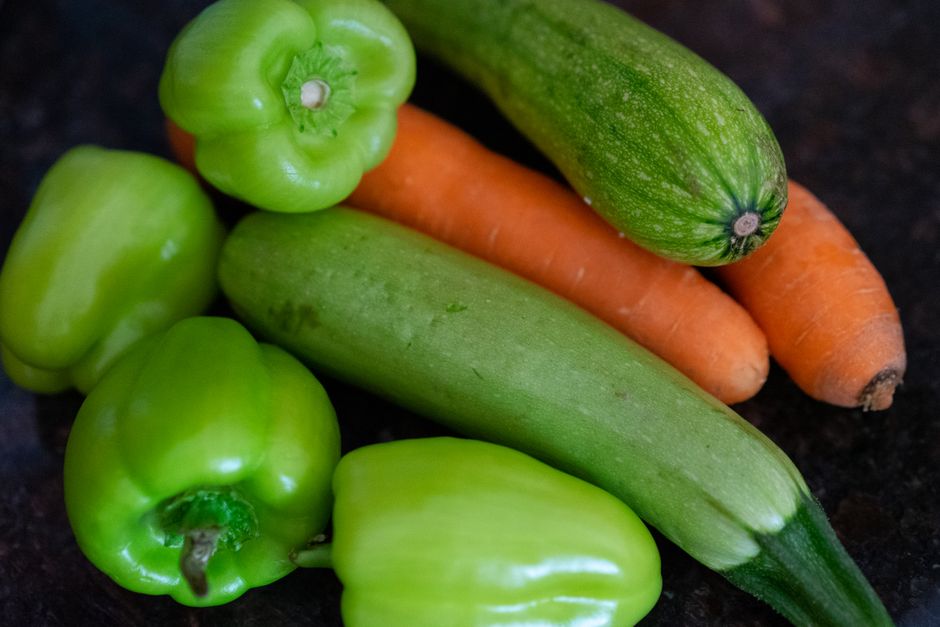
The key move is staging the tray. Start with the vegetables that need the longest roast, then add the quick-cooking ingredients later. This gives the eggplant time to turn creamy while keeping the zucchini intact and the tomatoes juicy instead of shriveled.
| Stage | Ingredients | Oven time | What to look for |
|---|---|---|---|
| 1 | Eggplant, onion, bell pepper, olive oil, thyme, half the salt | 20 minutes at 425°F | Edges begin to brown; onion softens |
| 2 | Zucchini, garlic, remaining salt | 15 minutes | Zucchini has browned patches but still holds its shape |
| 3 | Cherry tomatoes and red wine vinegar | 8 to 12 minutes | Tomatoes wrinkle and split slightly |
| Rest | Fresh basil or parsley, black pepper | 5 minutes | Juices settle and the vegetables finish softening |
Choose a wide pan with a low rim
A standard Nordic Ware Naturals Baker’s Half Sheet measures about 17.9 by 12.9 inches with a 1-inch rim. That surface gives four servings enough room to roast in one layer. Line it with parchment only if cleanup matters more than maximum browning; bare aluminum usually gives the vegetables firmer contact with the hot pan.
A smaller pan forces the vegetables into a pile. For that reason, a 9-by-13-inch dish is not a direct substitute for a full half sheet when making this amount. Split the food between two pans if the pieces touch.
Use the right tool for the cooking job
You do not need expensive equipment. A sharp chef’s knife and a large metal spatula matter more than a specialty appliance. If you prefer cast iron, the Lodge 12-inch Cast Iron Deep Skillet holds 5 quarts and retains heat well, but its smaller cooking surface makes crowding more likely. The ThermoWorks Thermapen ONE reads in one second or less with accuracy listed at ±0.5°F, though a thermometer is not needed for this vegetable recipe; visual texture is the better test.
How do you make the traybake step by step?
Prepare the vegetables before heating the oven
- Heat the oven to 425°F or 220°C. Put a large rimmed sheet pan inside while the oven heats if you want a stronger first sear.
- Cut the eggplant into 1-inch chunks. Toss it with 1 tablespoon of olive oil, then spread it on the hot pan with the onion wedges and bell pepper pieces.
- Roast for 20 minutes. Rotate the pan once after 10 minutes if your oven has a hot side.
- Cut the zucchini while the first batch roasts. Toss it with 1 tablespoon olive oil and add it after the first 20 minutes. Scatter the sliced garlic over the top rather than placing it under the vegetables, where it can scorch.
Keep the vegetables in a single layer. A little overlap is fine, but do not stack them. If oil pools at one end of the pan, use the spatula to redistribute it. The goal is a thin coating, not a puddle.
Finish with tomatoes and acid
- After the zucchini has roasted for 15 minutes, add the whole cherry tomatoes, the remaining tablespoon of olive oil, and a pinch of black pepper.
- Roast for 8 to 12 minutes, checking at the 8-minute mark. The tomatoes should split at the skin while the zucchini remains recognizable.
- Remove the tray and add 1 tablespoon of red wine vinegar. Toss gently so the vinegar coats the vegetables without breaking the eggplant.
- Rest for 5 minutes, then add chopped basil or parsley. Taste before adding more salt because the vegetables become more concentrated as they roast.
The vinegar belongs near the end. Added too early, it can make the vegetables taste sharp and can slow the sense of caramelized sweetness. Added after roasting, it wakes up the tomato and onion flavors without turning the tray into a sauce.
What are the common ratatouille traybake mistakes?
Why are my vegetables pale and soft?
The usual cause is crowding. Vegetables release steam, and steam needs room to escape. Use two trays if the food covers more than one layer. Also check the oven temperature with an oven thermometer if the tray repeatedly takes longer than 45 minutes; many ovens run 25°F low even when the display looks normal.
Can I add tomato sauce or cheese?
Not at the beginning. Tomato sauce turns a dry-roasting method into a braise, and the vegetables will simmer instead of brown. Add a few spoonfuls of sauce after roasting if you want a softer, more traditional stew-like finish. Add cheese only after the tray comes out; feta, goat cheese, or grated Parmesan works better as a finishing layer than as an early coating.
Do not use frozen zucchini or frozen eggplant for this version. They carry enough extra water to defeat the crisp-edged texture. Frozen peppers can work in a pinch, but thaw and pat them dry first, then add them with the zucchini.
How should leftovers be stored?
Cool the ratatouille within two hours and refrigerate it in a shallow container for up to 4 days. Reheat it in a 400°F oven for 10 to 15 minutes, or warm it in a skillet over medium heat. The microwave is fast but makes the vegetables softer. For meal prep, keep the roasted vegetables separate from bread, rice, or pasta until serving.
Is ratatouille traybake the right method for you?
For crisp edges and a simple dinner
Choose this ratatouille traybake when you want sweet roasted vegetables with browned edges, limited stirring, and a dinner that can move from oven to table in about 50 minutes; the clear verdict is to use a wide half sheet, stage the vegetables, and add tomatoes last because that combination gives the strongest texture with the least work.
For a soft, saucy result
Choose stovetop ratatouille instead when your priority is a spoonable sauce, very tender vegetables, or a dish that will sit warm for an hour; cook the onion and pepper first, add eggplant and zucchini, then simmer tomatoes until the mixture is soft, accepting that the vegetables will lose their separate roasted edges.
For four servings, this traybake is the better choice for grain bowls, sandwiches, pasta, and packed lunches because it stays distinct after cooling; for a large batch, double the ingredients but use two pans rather than one crowded tray, and for a richer finish, add white beans, chickpeas, or crumbled feta after roasting instead of adding extra oil during the cook.
The final comparison is simple: traybake for browned edges and low hands-on effort, stovetop for a soft tomato-rich stew, and two trays for reliable browning when serving more than four people.